


The foundation is the most important part of any metal building project. A good concrete slab keeps your structure level, anchors it against wind and weather, and stops moisture from seeping in. At Bull Buildings, we have a combined experience of over 100 years in management positions in the metal industry. We broker for more than 26 metal building manufacturers, so we know what works. Here is what you need to know about concrete slabs for metal buildings before you pour.
Why the Slab Matters So Much
A metal building puts a lot of weight and stress on its foundation. Good concrete slabs for metal buildings carry the full load of the steel frame, the roof, and everything you store inside. The slab also has to handle wind uplift, which tries to pull the building off the ground. A weak or thin slab can crack, sink, or let moisture through. Fixing a bad foundation later costs far more than doing it right the first time.
The slab also serves as your floor. A smooth, level surface makes the building easier to use. If you are parking vehicles, setting up a workshop, or storing equipment, a good slab makes daily life better.
Metal Building Slab Thickness: What You Need
Metal building slab thickness depends on what you plan to put inside. The standard for most garages and workshops is 4 inches. This works well for passenger vehicles, light trucks, and general storage. The concrete should be poured over a compacted gravel base at least 4 inches deep. This base helps with drainage and stops the slab from shifting.
If you plan to store heavier items, you need more thickness. A slab that will hold large trucks, RVs, or heavy equipment should be 5 to 6 inches thick. Some commercial applications call for even thicker pours. The edges of the slab often need to be thicker than the middle. A thickened edge, also called a haunch, runs around the perimeter and helps carry the weight of the steel frame and walls. Haunches are typically 12 to 16 inches deep and 8 to 12 inches wide.
Always check your local building codes before you pour. Some areas have minimum thickness rules based on frost lines, soil type, or seismic activity. Your building department can tell you what applies in your area.
Rebar Requirements for Metal Building Slabs
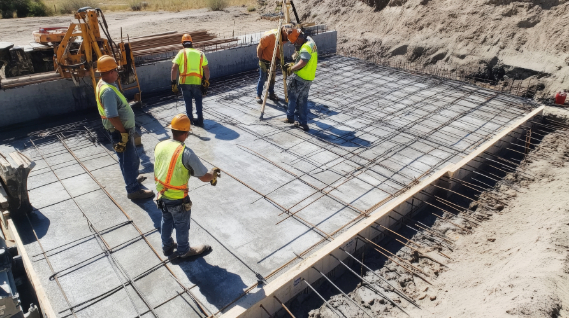
Rebar requirements for metal building slabs are not the same for every project. Rebar, short for reinforcing bar, is steel rod placed inside the concrete to add strength. Concrete is strong when squeezed but weak when pulled apart. Rebar handles the pulling forces and keeps cracks from spreading.
For most metal building slabs, rebar is placed in a grid pattern. The bars run both directions and are tied together where they cross. A common setup uses number 4 rebar, which is half an inch in diameter, spaced 18 to 24 inches apart. The rebar should sit in the middle of the slab, not at the bottom. This is done with small chairs that hold the rebar up while the concrete is poured.
Some projects use wire mesh instead of rebar. Wire mesh is lighter and easier to work with, but it does not add as much strength. For a metal building that will hold any real weight, rebar is the better choice. Your custom metal buildings will put demands on the slab that wire mesh alone may not handle well.
Fiber reinforcement is another option. Tiny fibers mixed into the concrete can help control small cracks. Fiber works alongside rebar, not as a replacement. Using both gives you the best of both worlds.
Concrete Specs for Metal Buildings
Concrete specs for metal buildings cover the strength of the mix, how it is poured, and how it is finished. The most important number is the compressive strength, measured in pounds per square inch, or PSI. For most metal building slabs, a mix rated at 3,000 to 4,000 PSI works well. This is strong enough for vehicle traffic and everyday use. In colder climates, a 4,000 PSI mix holds up better against freeze and thaw cycles.
The slump of the concrete also matters. Slump measures how wet the mix is. A slump of 4 to 5 inches is common for slabs. Too much water weakens the concrete. Too little makes it hard to work with. A good contractor knows how to find the right balance.
Air entrainment is another spec to think about. This means tiny air bubbles are mixed into the concrete on purpose. The bubbles give water room to expand when it freezes, which helps stop cracking. In areas with cold winters, air-entrained concrete is a smart choice.
Vapor Barriers and Gravel Base
Before the concrete goes down, the ground needs to be ready. A compacted gravel base at least 4 inches deep gives the slab a stable surface to sit on. The gravel also helps with drainage and stops water from pooling under the slab.
A vapor barrier is a sheet of thick plastic laid over the gravel before the concrete is poured. This barrier stops moisture from coming up through the slab from the ground below. Moisture can cause mold, rust, and damage to anything stored on the floor. A 10-mil or thicker vapor barrier is a good investment. It is especially key for concrete slabs for metal buildings that will be insulated or have finished interiors. It is also important if you plan to use your metal buildings and workshops for projects where a dry floor matters.
Anchor Bolts and Frame Connections
Anchor bolts connect the steel frame to the foundation. They are set into the wet concrete in a pattern that matches your building’s base. A bolt off by even an inch causes big problems later. Anchor bolt templates hold the bolts in place while the concrete sets so everything lines up. We can help you sort through these details when you order your building.
Curing and Finishing
Concrete cures through a chemical reaction that needs time and moisture. A slab that cures too fast can crack. Wait at least seven days before walking on it and 28 days before full strength is reached. Keep the surface damp or covered during that time.
The finish matters too. A smooth trowel finish works well for workshops and garages. A broom finish adds grip if the floor might get wet. Talk to your contractor about which finish fits your needs.
How We Help You Get the Foundation Right
We talk through foundation details with every customer. We price shop several options so you get a building that fits your needs and budget. We do not push one solution. We lay out choices and help you pick what works.
When you request a quote from Bull Buildings, we walk you through the specs your building will need. We stand for clarity from the first conversation to the finished build.
FAQs
How thick should a concrete slab be for a metal building?
For most garages and workshops, 4 inches is enough. For heavier use like large trucks or equipment, go with 5 to 6 inches. The edges should be thicker, typically 12 to 16 inches deep, to carry the frame load.
Do I need rebar in my metal building slab?
Yes, rebar is strongly recommended. A grid of number 4 rebar spaced 18 to 24 inches apart adds strength and keeps cracks from spreading. Wire mesh alone is not enough for most metal buildings.
What PSI concrete should I use?
A mix rated at 3,000 to 4,000 PSI works well for most metal building slabs. In colder climates, 4,000 PSI holds up better against freeze and thaw cycles.
How long does concrete need to cure before I can build on it?
Wait at least seven days before walking on the slab and 28 days before putting heavy loads on it. Keep the surface damp or covered during curing.
Can I pour my own slab, or should I hire a contractor?
Pouring a slab is a big job that needs skill and the right tools. Getting the grade right, placing rebar properly, and finishing the surface takes experience. Most people are better off hiring a pro. Bull Buildings can help you understand what your building will need so you can talk through the details with your contractor.