


A metal carport is one of the most reliable ways to protect your vehicles and equipment from the elements. Whether you need cover for a truck, ATV, work vehicle, daily driver, or RV, the size you choose determines how well the structure performs. Carports can be customized in countless ways, but there are standard metal carport dimensions that most suppliers follow. Understanding these measurements helps you choose a carport that fits your land, your vehicles, and your long-term plans.
Bull Buildings is a broker, not a builder, and we shop the market for you. With 28 suppliers and over 40 million dollars in yearly volume, we compare pricing and dimensions across the industry so you do not have to. Before you commit to a structure, it pays to understand how metal carport dimensions work and what size fits your needs.
Single Vehicle Metal Carport Dimensions
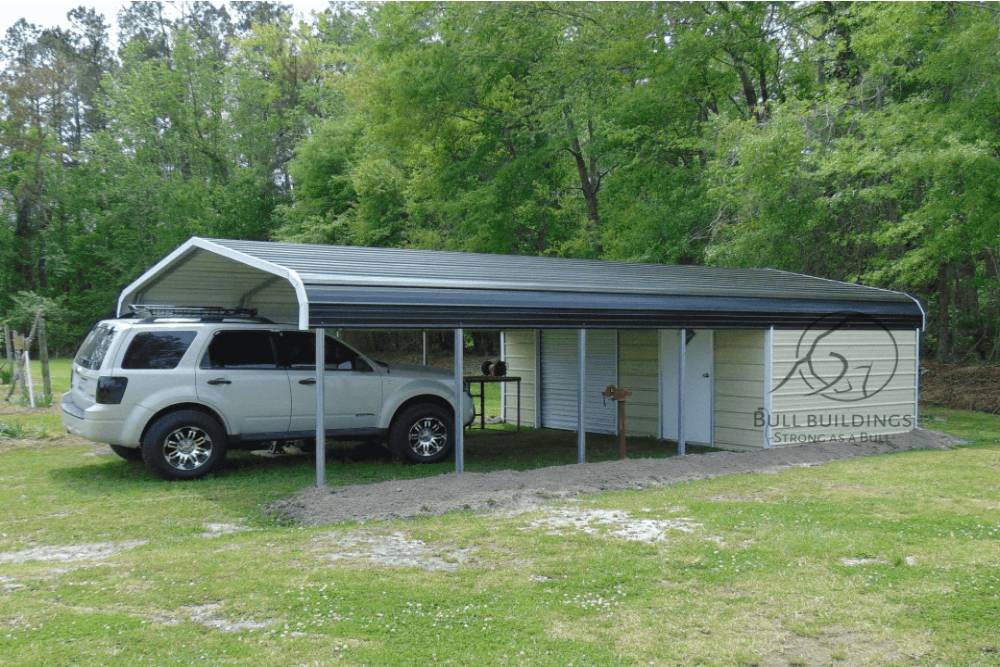
For one vehicle, the minimum width you should consider is 12 feet. This provides enough room for a truck, car, or van, as well as clearance to open doors comfortably. Going wider adds extra flexibility, especially if you want storage space on the sides for tools or equipment.
Common single-vehicle widths include:
- 12 feet for compact vehicles
- 14 feet for standard vehicles
- 16 feet for extra space on both sides
Length plays an important role as well. A basic carport length starts at 21 feet. This is enough for most sedans and small trucks, but many owners prefer 26 or 31 feet if they want more walking space around the vehicle or plan to use the extra room for gear storage.
When selecting height, consider any roof racks, light bars, or aftermarket accessories on your vehicle. Most standard single-vehicle carports come with side heights around 7 to 9 feet. This height works for most personal vehicles, but lifted trucks or work vans may require additional clearance.
Double Wide Carport Dimensions for Two Vehicles
If you plan to store two vehicles side by side, the standard double-wide carport width ranges from 18 to 24 feet.
Use these reference points:
- 18 feet fits compact vehicles
- 20 to 22 feet fits most standard cars and small SUVs
- 24 feet fits full-sized trucks and vans with doors fully open
Choosing the right width prevents vehicles from bumping into each other and ensures there is enough space to walk comfortably between them. If you plan on adding shelving, tool racks, or accessories inside the carport, consider going wider than the bare minimum.
Lengths for double carports typically follow the same increments as single carports. A 21-foot length is the baseline, but 26 or 31 feet provides better maneuverability.
Again, pay attention to side height, not just peak height. The side height determines the maximum door opening you can use if you ever convert the carport into an enclosed garage.
Metal Carport Dimensions for Trucks and Oversized Vehicles
Work trucks, service vehicles, and cargo vans require more space than standard cars. Width should be increased to ensure mirrors have clearance and doors can open without hitting the frame.
Recommended sizes include:
- 12 to 16 feet width for single heavy-duty trucks
- 20 to 24 feet width for two large trucks
- 26 to 31 feet length for commercial vehicles
- 9 to 12 feet side height for taller builds
If your truck carries equipment on top or has aftermarket additions like headache racks, toolboxes, ladder mounts, or lift kits, increasing the height is essential. Height mistakes are one of the most common issues buyers face. If the side height is too low, the vehicle may not clear the opening regardless of the roof peak.
Commercial Equipment Carport Dimensions
Some metal carports are used for storing heavy machinery, such as front-end loaders, crane trucks, tractors, or other commercial equipment. In these cases, standard carport sizes are rarely enough. Both width and height need to be increased to accommodate large frames and tall attachments.
General guidelines include:
- Increase side height by 3 to 5 feet for vehicles with elevated equipment
- Increase by 10 to 12 feet for tall box trucks or crane vehicles
- Measure the tallest point of the vehicle and add 4 to 5 feet for comfortable clearance
Never underestimate the vehicle height. A mistake here can make the carport unusable. Bull Buildings often recommends that buyers measure the highest and widest points of their equipment before selecting a structure. This ensures the carport matches the real dimensions of the machinery being stored.
RV and Camper Carport Dimensions
RVs require some of the largest metal carport dimensions available. These vehicles push the limits of width and height, especially when slide-outs, antennas, air conditioners, and roof accessories are involved.
Key guidelines include:
- Width
Standard RVs require about 12 feet, while RVs with slide-outs need 18 to 20 feet. - Length
Add 3 to 5 feet to the total RV length for easier maneuvering. - Height
RV carports require at least 12 to 14 feet of side height to accommodate roof mounted accessories.
Because RV roofs must shed water efficiently, additional height may be needed to maintain proper roof slope in areas with heavy rain or snow.
Here are typical metal RV cover sizes based on RV type:
- Small campers: 12 by 20 by 10
- Travel trailers: 12 by 25 by 10
- Class B motorhomes: 12 by 30 by 12
- Class C motorhomes and fifth wheels: 18 by 35 by 14
- Class A motorhomes: 20 by 45 by 16
If you want an enclosed RV garage, larger roll-up doors are required. For example, Class A motorhomes often need a 14 by 14 foot door to ensure full clearance.
Measuring Metal Carport Dimensions the Right Way
Avoid guessing your carport size. Take accurate measurements before choosing any structure:
- Measure the width of the vehicle at its widest point, including mirrors or slide-outs.
- Measure the height of the vehicle including antennas, roof racks, and air conditioners.
- Measure the length from the front bumper to the furthest rear point.
- Add space for maneuvering and storage.
Also note:
- Roof peak height is not the same as side height.
- Side height determines what size door can be installed.
- Length can be increased in 5-foot increments to match your needs.
Bull Buildings helps buyers avoid costly mistakes by confirming measurements with suppliers before any order is placed.
Choosing Metal Carport Dimensions
Picking the right metal carport dimensions is all about understanding the vehicles or equipment you plan to store. The width, length, and height determine how functional the structure will be for decades to come. Whether you need a simple single vehicle cover or a commercial sized RV shelter, the measurements must match real world needs.
Bull Buildings handles the shopping for you. We compare all 28 suppliers, confirm the proper dimensions, and negotiate the best price based on our high purchase volume. You get the right size, the right structure, and the best deal without having to figure out carport dimensions on your own.