


When it comes to housing horses, the right setup makes all the difference. Too small, and you’re dealing with cramped stalls and tight aisles. Too big, and you’re spending money on space you don’t use. That’s why the dimensions and size of a horse barn are two of the most important choices you’ll make before you even begin the building process.
At Bull Buildings, we’ve worked with horse owners across the country, helping them size and set up the metal barns that make daily life easier for them and their animals. It doesn’t matter if you’re boarding one horse or a whole herd- choosing the right size means better airflow, smoother chores, and a lot less stress in the long run.
Here’s how to figure out what kind of barn really fits your needs, as well as your land.
Start with Stall Size
The core of any horse barn is the stall. If your stalls are too tight, your horses will be uncomfortable and harder to care for. Standard stall sizes are usually 10×10 or 12×12 feet. Most horse owners lean toward 12×12 because it gives full-sized adult horses more room to move and lie down.
If you’ve got ponies or younger horses, you might get away with smaller stalls. But for full-grown horses, 12×12 is what we see most often. You also want enough space for your horses to turn around without bumping into walls or gates. That extra couple of feet makes all the difference.
Think about the number of horses you’re housing. One horse means one stall. Two horses, two stalls. But if you plan to grow your operation or board additional horses in the future, it’s smart to build a barn that gives you room to add more stalls later.
Aisle Width Affects Daily Work
When sizing your horse barn, don’t forget the space between your stall rows. The aisle is where you’ll walk, groom, muck out stalls, and maneuver gear. You’ll also need to safely move horses in and out. If you short yourself on aisle space, chores get harder fast.
Aisles should be no narrower than 10 feet. But if you’re running equipment like a small tractor or ATV through the barn, go bigger. We often recommend 12 or even 14 feet if you’ve got the room. That way, you don’t feel like you’re squeezing through every time you bring in hay or clean out stalls.
Tack Room and Feed Room Space
If you plan to store saddles, bridles, blankets, feed, and supplies in the barn, you’ll need to make room for a tack room and feed area. A lot of horse owners make the mistake of leaving these out during planning, then end up cramming everything into stalls or outside sheds.
Tack rooms don’t have to be huge, but they should be big enough to move around in. Eight by ten is a good starting point. The same goes for feed rooms, especially if you’re storing bags of grain or hay in there. Bigger barns often combine both into one larger storage space with shelving and bins.
Add Shelter for More Than Just Horses
Horses aren’t the only thing that need space inside a barn. Think about everything else that’s part of your setup. Do you need room for a trailer? A place to park your utility vehicle? Are you planning to keep your grooming supplies or tools inside, too?
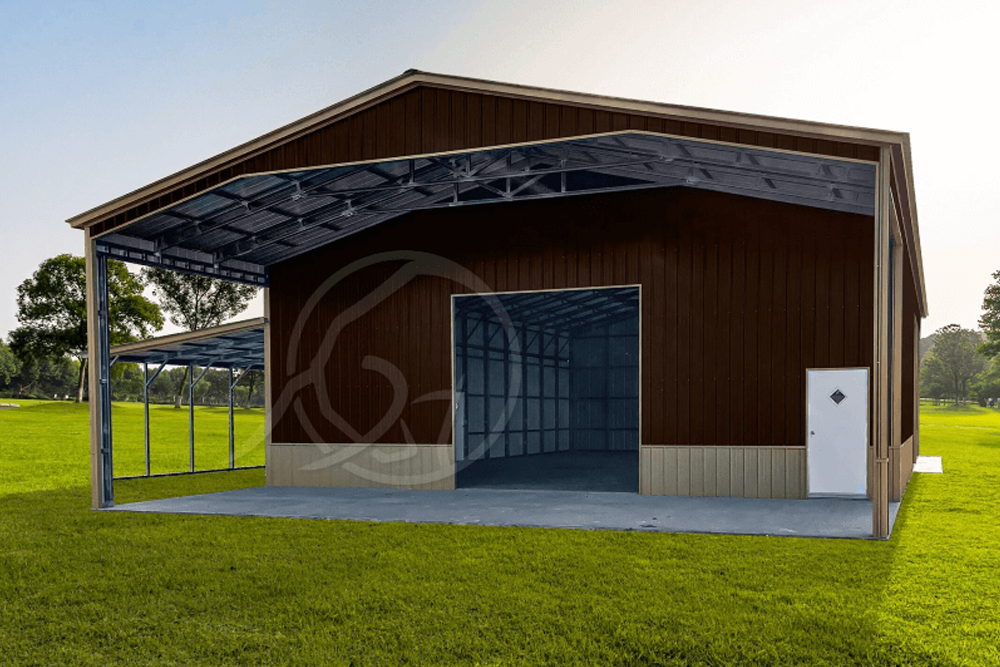
Structures like a 40x41x13 Metal Horse Barn are sized for that kind of flexibility. You can keep your animals in the center and use the lean-to sides for gear, feed, or vehicles. It’s a practical way to build without adding on multiple buildings.
Consider the Layout Style
The layout of your barn has a big impact on its overall size. The two main options are the center aisle and the shed row. A center aisle barn has stalls on both sides of a main walkway. A shed row places all the stalls on one side, often with an overhang or porch for weather protection.
A center aisle layout is more compact, which helps in colder climates. It also gives you more covered space under one roof. A 48x26x12 Metal Horse Barn follows this layout and gives solid coverage for both horses and equipment.
Shed row barns are simpler and often easier to ventilate in hotter areas. But they tend to take up more width on your property. If space is tight, that’s something to think about.
Height and Roof Pitch
Another factor you can’t ignore is the height of the barn. Horses don’t need a cathedral ceiling, but they do need headroom, especially if they rear up. Twelve feet is usually the sweet spot for stall height. It allows for airflow and safety without wasting materials.
If you’re adding a loft for hay storage or a second level for tack, go higher. Just keep in mind that more height means more cost in materials and sometimes changes to wind load requirements.
Structures like a 68x31x14 Continuous Roof Horse Barn offer high-clearance center sections that are perfect for hay storage or future expansions.
Weather and Ventilation
Bigger isn’t always better if it means more hot air getting trapped inside. Ventilation should always be part of the barn sizing conversation. You’ll want enough space for roof vents, gable vents, and even open eaves if your climate allows it.
In warmer states, tall ceilings help hot air rise and escape. In colder regions, a tighter but well-ventilated barn keeps things dry and draft-free. Think about your area’s average summer and winter temperatures before you commit to a specific size or shape.
Budget and Material Efficiency
Budget matters, and size affects price more than any other factor. But what we see time and again is people regretting that they built too small. You don’t need to go overboard, but trying to squeeze your horses into tight quarters or skipping storage space will cost you later when you have to build again.
It’s more cost-effective to go slightly bigger than to expand a poorly sized barn. For example, going from 36 feet to 48 feet in length might only add a few thousand dollars, but it gives you two or more additional stalls and space to move around.
If you’re concerned about cost, look for barn styles that offer coverage with less material waste. Structures with lean-tos or modular stall layouts can keep costs down while giving you the flexibility you need.
Future-Proofing Your Investment
Maybe you’ve only got one horse right now. But what about in five years? Are you planning to breed? Thinking about boarding? Want a space for your kids to ride and learn?
If you build for today without thinking about tomorrow, you’ll be boxed in. We always encourage folks to build with a little room to grow. That doesn’t mean you have to finish every stall right away. But your foundation, layout, and roofline should leave the door open for more.
One smart move is to size the barn for more stalls than you need, but only finish what’s necessary. That way, you’re not paying full freight now, but you’re also not starting from scratch down the road.
Land and Layout Considerations
You also need to think about how your barn fits on your land. How far is it from the pasture? Is there enough space to bring in a truck or trailer? Will you be adding a riding ring or wash area nearby?
The barn should be close enough to your daily operation that it makes sense, but not so close that it becomes a hazard in bad weather. Drainage, elevation, and wind exposure all matter. If your land slopes, you might need grading work before you can even start construction.
We always look at property size and layout before recommending a barn. A long, narrow property might need a different layout than a wide, open piece of land. There’s no one-size-fits-all setup, and the best barn is one that works with your land, not against it.
Why Size Really Matters
At the end of the day, barn sizing isn’t about square footage. It’s about function. The right barn dimensions and size will make your life easier, your horses more comfortable, and your operation run more smoothly day in and day out.
Think about your horses. Think about your gear. Think about the way you work. Then plan a barn that supports all of it.
At Bull Buildings, we don’t push you toward a single model or brand. We work with over two dozen suppliers, so you can see every option and pick what works best. Whether you need something compact or a full-scale boarding setup, we match you with the best offer in your area and help you get it done without wasting your time or your money.